Seven Tips for Creating a Beautiful Fall Container
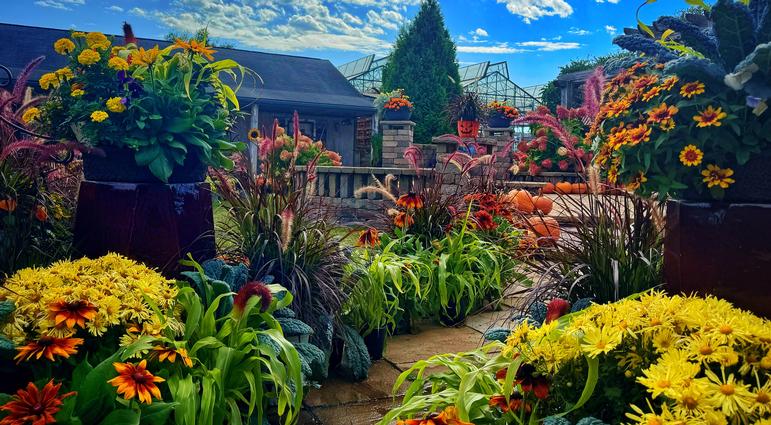
There’s something about a beautiful container filled with the colors and textures of fall that makes the change of seasons feel official.
Garden mums are a natural place to start. They come in an incredible range of fall colors, bloom for weeks, and look beautiful all by themselves. But they also combine wonderfully with grasses, foliage plants, annuals, perennials, and even a few plants you might not immediately think of for fall.
With so many possibilities, how do you put them all together?
The good news is that there really aren’t many rules. A few basic ideas can help you get started, and from there, the fun is in making the container your own.
1. Start with Your Container
Before choosing your plants, consider the container itself.
How large is it? Where will it be displayed? Will you see it from every direction, or will one side face a wall? Do you want something tall and dramatic or something lower and more compact?
And perhaps most importantly: how many plants can reasonably fit?
It’s easy to fall in love with eight different plants only to discover that your container comfortably holds four. Starting with the space you have makes everything that follows a little easier.
2. Think About Height and Shape
The familiar thriller, filler, spiller formula is a great place to begin.
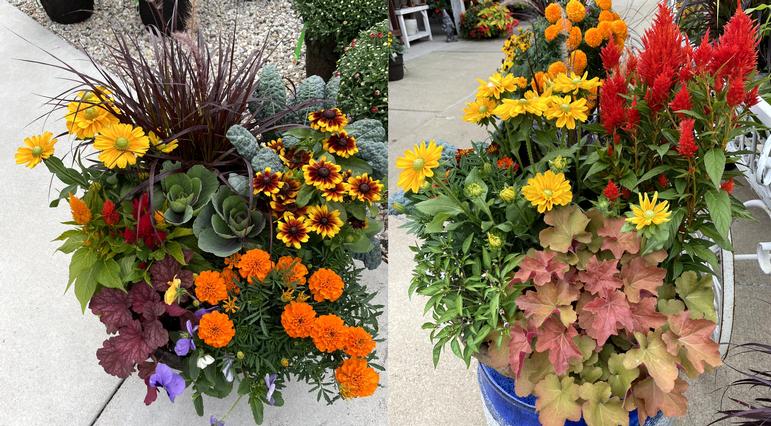
A taller plant creates the “thriller.” Purple fountain grass and ornamental millet are wonderful examples, adding height, movement, and texture.
Around that, “fillers” create the body of the container. Garden mums, asters, Rudbeckia, pansies, zinnias, marigolds, celosia, heuchera, ornamental peppers, kale, and cabbage can all fill that role in very different ways.
Finally, trailing plants such as Mezoo, Goldilocks lysimachia, and Silver Falls dichondra can spill over the edge and soften the container.
But remember: thriller, filler, spiller is a guideline, not a requirement. A container filled with beautiful mounding plants can be every bit as striking, and sometimes one spectacular plant is all you need.
3. Don't Forget the Foliage
Flowers usually get our attention first, but some of the most interesting fall combinations happen when we start paying attention to the leaves.
Heuchera offers an incredible range of foliage colors. Dusty miller and Silver Falls dichondra bring cool silver tones. Firefox sedge adds fine, coppery-brown texture. Kale, cabbage, and Swiss chard contribute bold leaves and unexpected color. Purple fountain grass brings deep burgundy foliage along with its graceful plumes.
Foliage also gives you something flowers alone can't always provide: contrast.
Try fine, wispy grass next to broad leaves. Put silver foliage against burgundy. Pair something upright with something rounded or trailing.
Color catches your eye, but differences in shape and texture are often what make a container really interesting.
4. Choose Your Colors
Traditional oranges, yellows, reds, and bronzes are classics for a reason. Combine them and you immediately get that warm harvest feeling.
But fall gives you plenty of room to experiment.
Try burgundy with silver. Purple with chartreuse. Cream with deep red. Dark pansies and ornamental peppers can create a completely different look for Halloween. You can even choose colors that coordinate with your home—or your favorite football team.
And don't dismiss a plant simply because you don't normally associate it with fall. A brilliant orange mandevilla, colorful petunia, or bright zinnia can be exactly what a combination needs.
Rather than asking whether something is a “fall plant,” look at its color, texture, pattern, and growth habit and ask whether it works with the plants around it.
5. Put the Plants Together
Here's one of our favorite pieces of advice: play with the plants before you plant them.
Set a mum next to an ornamental grass. Add a heuchera. Try a pansy or Rudbeckia. Put Silver Falls along the edge.
Then step back and look.
Don't like it? Move something.
Try another color. Substitute a different plant. Turn the container around and look again.
Sometimes you'll discover that two plants you thought would look wonderful together just don't. Other times, you'll put together a combination you never would have planned and immediately think, “That's it!”
That's part of the fun.
6. Remember That You're Planting Something Alive
Unlike an artificial arrangement, your fall container isn't finished the day you plant it.
That mum covered with buds may be bursting with color next week. Ornamental millet will develop its distinctive plumes. Trailing plants will continue down the side of the container. Some flowers will fade while others reach their peak.
Your container will change as fall progresses.
When choosing your plants, look at what they are doing now—but also think about what they're going to do next.
7. Make It Your Own
There isn't one recipe for the perfect fall container.
Start with a beautiful mum and build around it. Make ornamental millet the centerpiece. Combine Rudbeckia with colorful heuchera. Add ornamental peppers for something unexpected. Let Silver Falls cascade over the side. Put Swiss chard in a flowerpot simply because you like the way it looks.
Or choose one gorgeous mum, put it in your favorite container, and call it done.
It's your container.
Choose plants that fit the space, pay attention to height, color, texture, and growth habit, and don't be afraid to move things around until you find a combination that makes you smile.
Because in the end, the best fall container is the one that looks like fall to you.